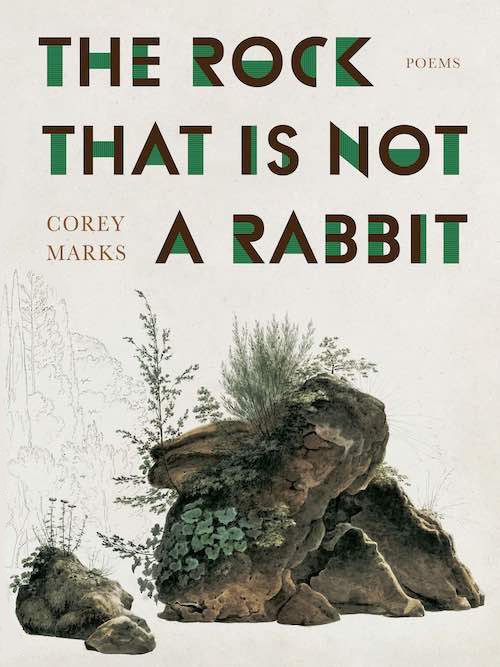
Finalist, 2024 The Writers League of Texas Award for Poetry
Finalist, 2024 The Burdine C. Johnson Award for Best Book of Poetry from the Texas Institute of Letters
The otherness of the natural world shimmers into view, into consciousness, and so does the city that encroaches upon it, in Corey Marks’s bold, Stevensian, textured memories and meditations. This full-bodied book is an enlargement of experience.
—Edward Hirsch, author of The Heart of American Poetry
What a strange and unexpected book Corey Marks has written, a book in which thinking allows the poem to approach real and genuine feeling. How gently it refreshes our perceptions of reality, reminding us of the loneliness of the imagination in an uncanny, but human-scale, poem like “Horse Headed Boy.” With a deceptively plain style that branches into introspection as dense as a wood, the poet registers the consequences of silence, personal and cultural, the endless and terrifying sublime of “the warren / of what I hadn’t said.” This is a meditative book, a book in which a kind of concentrated thinking can feel light as snow as it buries you with implication. It conjures up a world of American houses in which no one has the courage to say what needs to be said, American landscapes in which we go to figure out what those things are, and finally, American thresholds in which some measure of honesty might eventually be (painfully and beautifully) possible.
—Katie Peterson, author of Life in a Field
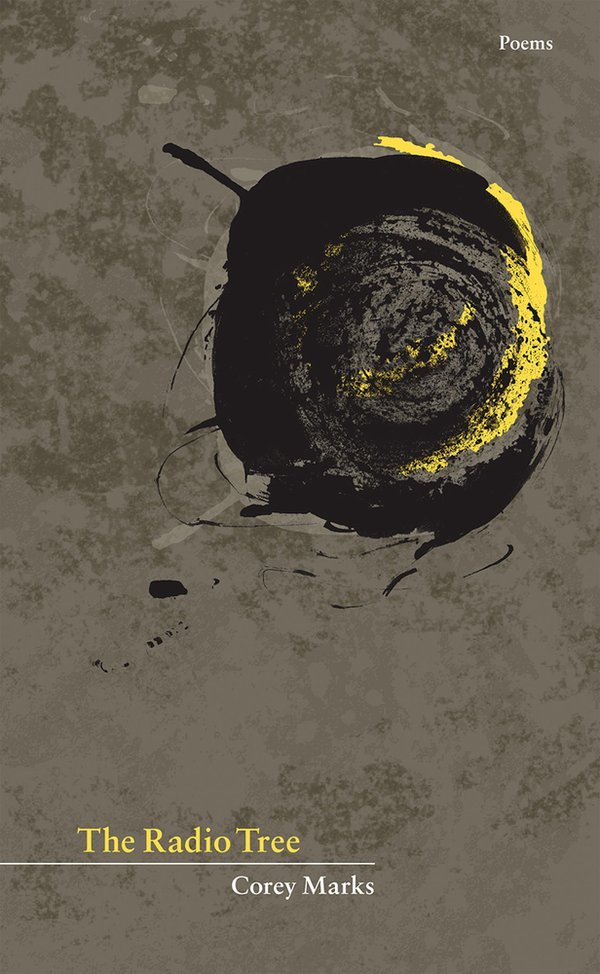
Winner of the Green Rose Prize
“In THE RADIO TREE, Corey Marks masterfully navigates the sometimes magical, sometimes heartbreaking geographies of time and narrative of language itself. To read this book is ‘to hear a new way of saying the old things: fire and grief’ in poems ‘fine-boned, ‘ wise, and beautiful. The Radio Tree is a splendid collection.” –Claudia Emerson
“Corey Marks’s delightful and surprising second book, THE RADIO TREE, uses such fresh and clarifying metaphoric language that we look ‘through the near world’ as if into ‘the afterlife of chance.’ And what we find there are such lovely and strange inventions made from what’s near at hand an unraveled kite string stretching over a ‘tornado’ of debris or ‘tentacles of magnetic tape’ that Marks reminds us how poetry comes alive to us by way of glimpses and inklings.” –Michael Collier
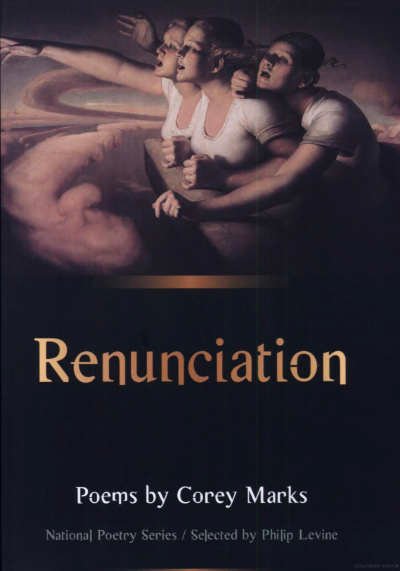
Renunciation introduces a powerful new poet whose work, though it treads the ground of silence and loss, bears a redemptive grace. Disquieting and healing, Corey Marks’s poems hold to “a moment when possibility / bristles so close it holds a shape in the air.”
The sculptor Gislebertus, Doubting Thomas, Theseus, and John Keats share space in the pages of Renunciation with a survivor of the bomb in Hiroshima, a blind girl in the South American jungle, and DeSoto’s thirteen swine in the hold of a ship bound for America. Rich with almost palpable nuances of light and sound, Marks’s lyric meditations unravel a constant play of loss and continuation, “mending sense from spare threads” and hovering over connections undone even as they are made.